
CLIMB Model for AI Readiness

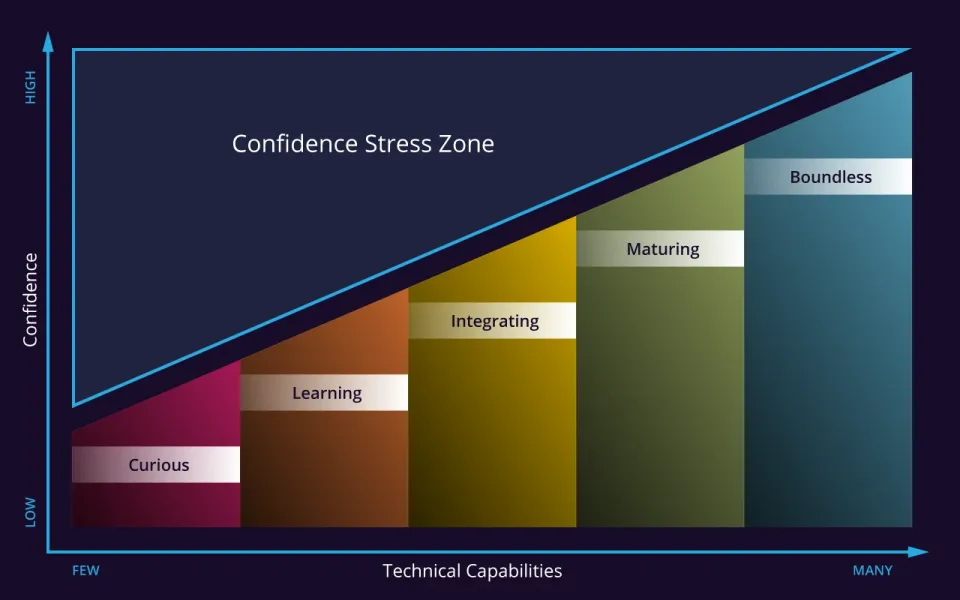
Buying the capability is the easy half. Using it is the other one.
Most organizations can acquire AI capability faster than their people can get comfortable using it. The CLIMB Model measures both — what you have built, and whether your teams will actually reach for it when the work is real.
What it measures
Technical Capabilities and Confidence.
Technical Capabilities are the part you can buy, build or grant access to: the tools, the data foundations, the infrastructure. Confidence is harder, because it is whether people will use any of it when it matters. Capability without confidence produces licenses nobody opens. Confidence without capability produces enthusiasm that runs into a wall. We apply our proprietary rubric to these two axes to determine where organizations sit on the CLIMB model, from Curious to Boundless.

What it consists of
Five levels across three readiness domains.
AI Readiness is measured on the CLIMB model across cognitive, cultural and technical readiness using our proprietary rubric. Cognitive readiness is how well people reason with AI and verify what it gives them. Cultural readiness is the psychological safety and shared language that decide whether they explore at all. Technical readiness is the data and infrastructure underneath. Organizations rarely progress evenly across all three, and the assessment shows you which one is holding you back.

Where it sits
The third step, and it depends on the first two.
The road to AI readiness runs through intergroup leadership and innovation maturity. An organization whose groups cannot talk to each other will not build shared language about AI, and one that shelves what it produces will not sustain the experiments AI requires. BRIDGES first, INSPIRE second, CLIMB third. Arriving here without the first two is the most common reason AI programs stall.

Our frameworks are designed to work together.
The CLIMB Model covers how organizations build the technical capabilities to use AI and the confidence level of teams to use those capabilities. The remaining three evaluate how leaders develop their language and how it affects work across groups, how organizations build a culture of innovation and whether it takes hold, and how they establish data readiness and the skills to benefit from it.
-
BRIDGES Covers how Leader Language shapes group identity and affects working across groups.
-
INSPIRE Covers how organizations build their culture of innovation and the health of its adoption.
-
IMPACT Covers how organizations establish their data readiness practices and the organizational skills needed to benefit from them.

Discover where you are on the CLIMB Model.
Take our 10 question AI Readiness quiz. It's free and you get your results right away.