
IMPACT Model for Data Governance & Transformation

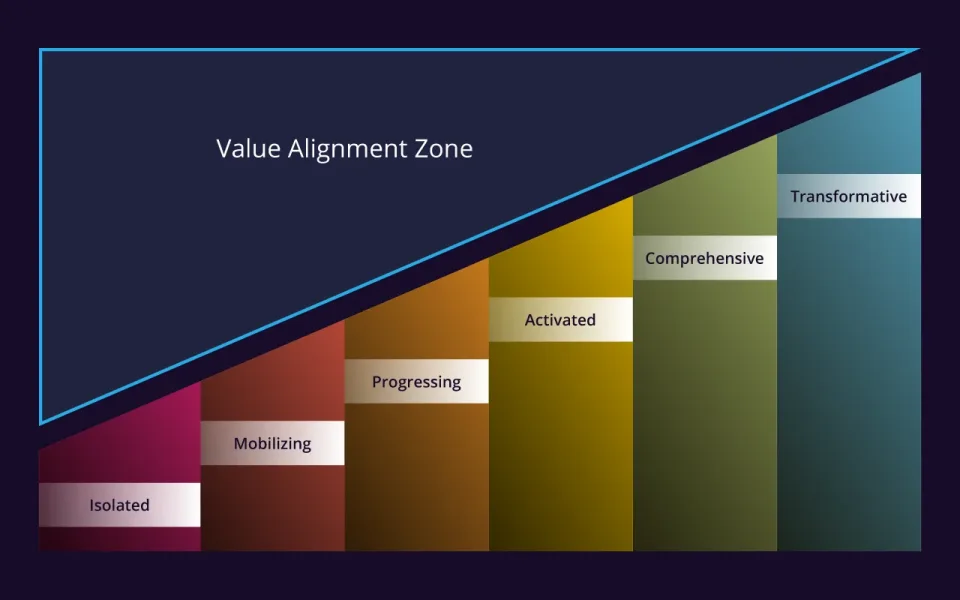
Building data infrastructure is what you can buy, aligning on values is about who you are.
AI efforts rarely stall because a model was incapable; they stall because the organization was not ready to put it to work. Data nobody trusts, no named owner, and definitions that differ by department cause friction. The IMPACT Model measures the data economy itself and the organization that has to sustain it.
What it measures
Data Transformation Readiness and Organizational Readiness.
Data Transformation Readiness is the technology side: is your data trusted, owned, and known? Organizational Readiness is the people side: is there a sponsor and a plan, a working operating model, and people with the roles, skills and culture to sustain it over time. Both must be present, and neither is enough alone. We apply our proprietary rubric to these two axes to determine where organizations sit on the IMPACT model, from Isolated to Transformative.

What it consists of
Six levels across six diagnostic dimensions.
Data readiness is measured on the IMPACT model across six dimensions, three on each axis. On the technology side: trusting your data, owning your data, and knowing your data. On the people side: aligning on what matters, how the work actually runs, and whether your people have the roles, literacy and culture to keep it going. The assessment leads with your strongest dimension, then the one with the most room to grow, then one clear first step.

Where it comes from
Grounded in the industry standard, sharpened by real operational experience.
The IMPACT Model is aligned to DAMA-DMBOK, the data management body of knowledge that practitioners across the industry already work from. The IMPACT dimensions are aligned to the principles of data quality, governance, metadata, master data, security, and the people-side capabilities that most maturity models leave out. The model is a combination of industry knowledge and real operational experience.

Our frameworks are designed to work together.
The IMPACT Model covers how organizations establish their data readiness practices and the organizational skills needed to benefit from them. The remaining three evaluate how leaders develop their language and how it affects work across groups, how organizations build a culture of innovation and whether it takes hold, and how they build the technical capability to use AI and the confidence to use it.
-
BRIDGES Covers how Leader Language shapes group identity and affects working across groups.
-
INSPIRE Covers how organizations build their culture of innovation and the health of its adoption.
-
CLIMB Covers how organizations build the technical capabilities to use AI and the confidence level of teams to use those capabilities.

Discover where you are on the IMPACT Model.
Take our 10 question quiz. It's free and you get your results right away.